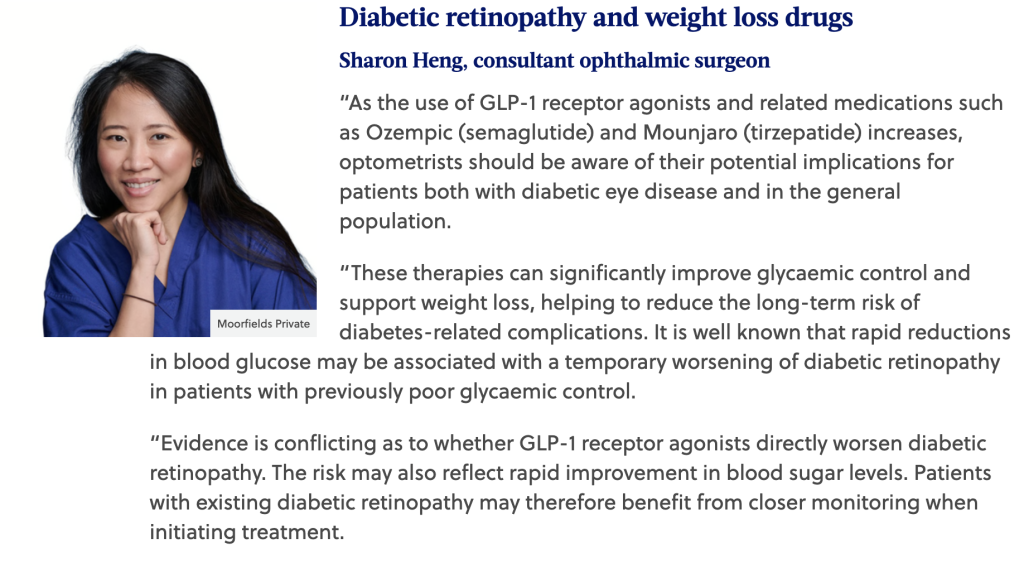
Dr Sharon Heng, Consultant Ophthalmic Surgeon at Moorfields Private, has been featured in Optometry Today in an article examining how new medications, emerging treatments, and artificial intelligence are influencing the field of ophthalmology.
Published on 12 October 2026, the article, “Innovation in Action: How New GLP-1s, New Treatments and AI are Changing Ophthalmology,” brings together perspectives from Moorfields Private consultants on developments that are relevant to eye care professionals. The feature explores how changes in medical treatment and technology may affect clinical practice, patient monitoring, and collaboration between eye care specialists.
As one of the Moorfields Private consultants featured in the publication, Dr Heng contributes her specialist perspective on the relationship between newer medications and eye health, particularly the considerations surrounding glucagon-like peptide-1 (GLP-1) receptor agonists.
Dr Sharon Heng Discusses GLP-1 Medications and Eye Health
GLP-1 medications, including semaglutide, have attracted considerable attention for their role in managing type 2 diabetes and supporting weight management. As their use becomes more widespread, healthcare professionals are continuing to examine their potential implications for patients with existing eye conditions.
One important consideration is diabetic retinopathy, a complication of diabetes that affects the blood vessels in the retina. Changes in blood glucose levels can influence the progression of diabetic retinopathy, particularly when glucose control improves rapidly in people whose diabetes has previously been poorly controlled.
Dr Heng’s contribution highlights the importance of recognising these considerations when caring for patients who use GLP-1 medications. Understanding a patient’s medical history, diabetes status, and existing eye health can help inform decisions about monitoring and specialist assessment.
The relationship between GLP-1 medications and diabetic retinopathy remains an area of clinical interest. Rather than assuming that these medications directly cause eye disease, healthcare professionals need to consider the available evidence alongside individual patient risk factors and changes in blood glucose control.
The Importance of Monitoring Patients With Diabetic Eye Disease
Diabetic retinopathy may progress without noticeable symptoms during its early stages. Regular eye examinations are therefore important for people with diabetes, even when their vision appears normal.
For patients who already have diabetic retinopathy or other diabetes-related eye complications, changes in treatment may warrant particular attention. Coordinated care between the healthcare professionals managing a patient’s diabetes and those monitoring their eye health can help ensure that relevant concerns are identified and assessed appropriately.
Dr Heng’s participation in the Optometry Today feature reinforces the value of keeping eye care professionals informed about developments in other areas of medicine that may affect their patients. Optometrists can play an important role in identifying changes in vision, recognising signs that require further investigation, and referring patients for specialist assessment when appropriate.
Patients who experience new or sudden visual changes should seek prompt medical assessment rather than waiting for their next routine appointment.
Advancing Eye Care Through Collaboration and Knowledge Sharing
Ophthalmology continues to evolve as new treatments, diagnostic approaches, and technologies become available. These developments create opportunities to improve how eye conditions are identified, monitored, and managed, while also introducing new considerations for clinical decision-making.
一旦确诊为复发性或慢性疾病, Optometry Today article examines these changes through the perspectives of Moorfields Private consultants. By bringing specialist insights into a professional publication, the feature supports knowledge sharing across the eye care community and encourages practitioners to remain informed about developments that may influence patient care.
Collaboration between optometrists, ophthalmologists, and other healthcare professionals is particularly valuable when patients have complex conditions that require coordinated management. Sharing information and understanding the potential implications of new medications can help clinicians make informed decisions about monitoring, referrals, and follow-up care.
The article’s wider focus on new treatments and artificial intelligence also reflects the changing landscape of ophthalmology. As technologies and therapeutic options continue to develop, ongoing professional education remains important for understanding their potential benefits, limitations, and practical applications.
Read the Full Feature in Optometry Today
Dr Sharon Heng’s inclusion in Optometry Today highlights her contribution to professional discussions on emerging developments in ophthalmology and their relevance to everyday eye care practice.
As one of the Moorfields Private consultants featured, Dr Heng shares specialist insight into an evolving area of clinical interest: the relationship between GLP-1 medications, diabetes management, and eye health. Her participation also underscores the importance of collaboration and continued learning as healthcare professionals respond to new evidence and changing treatment approaches.
Read the full article here to discover Dr Heng’s insights alongside those of her fellow Moorfields Private consultants on the latest advances shaping ophthalmology.